Inside the house
If you've prepped your house for the winter weather, you're ahead of the game. When the temperature drops, here are a few more steps to take.
- Keep your house heated to a minimum of 65 degrees. A temperature lower than 65 degrees might not keep the inside walls from freezing. Many insurance policies require maintaining heat to help prevent frozen pipes, and the temperature inside walls where pipes can be colder than the air in your rooms.
- Check the location for the main water shutoff in your home. And how it works. Quick access can limit damage if a pipe bursts.
- Open hot and cold faucets enough to let them drip slowly. In severely frigid temperatures, keeping water moving within the pipes will help prevent freezing.
- Check that fireplaces, wood stoves and electric heaters are working properly. Make sure there are no combustible items near the heat sources and watch them closely, especially the first time in the season you use them.
- Keep your fireplace flue closed when you’re not using it.
- Ask a neighbor to check the house regularly any time you're away. Quick detection of frozen pipes or leaks can significantly reduce damage. For extended absences, consider having a professional drain your water system—including pool plumbing if applicable—to prevent freezing or bursts.
Outside the house
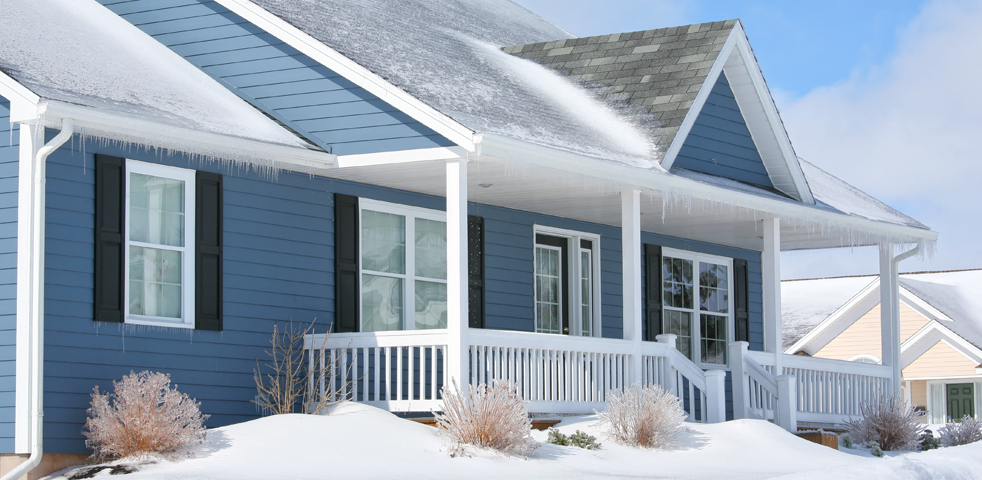
The weight of snow could damage your roof. Backed-up gutters might allow water to seep into your house. Vigilance is key during severe weather—stay ahead of the potential hazards outside your home.
- Keep sidewalks and entrances to your home free from snow and ice. You don't want anyone to slip and fall.
- Watch for ice dams near gutter downspouts. Ice dams can cause water to build up and seep into your house. Clear gutters of leaves and debris to allow runoff from melting snow and ice to flow freely.
- Run your swimming pool pump at night when the temperatures are expected to go below freezing. This will keep the water flowing through the pipes.
- Keep your garage doors closed. This will prevent weather damage to whatever's stored in there. Plus, if your garage is attached to your house, the home entrance door from the garage is probably not as well insulated as an exterior door so this will keep more heat in.
- Double check for dead, damaged or dangerous tree branches and have them removed. Even if they looked sound earlier in the year, trees can be affected by ice, snow or wind. When stressed, branches can fall and damage your house or car, or injure someone on or near your property.
In the event of a problem
Sometimes the unfortunate happens—but quick action can minimize the damage.
- Don't wait for frozen pipes to burst. If your pipes are frozen, take measures to thaw them immediately, or call a plumber for assistance.
- If your pipes burst, first turn off the water. Know where the water main shut off is.
- Properly dry and repair any water damage. This will help prevent any potential problems with mold.
- Call your insurance professional as soon as possible. He or she will help you understand what's covered by your policy. And familiarize yourself with the claims filing process.
Next steps: Now, learn how to protect your home from water damage.