Cellphones and Driving
THE TOPIC
APRIL 2012
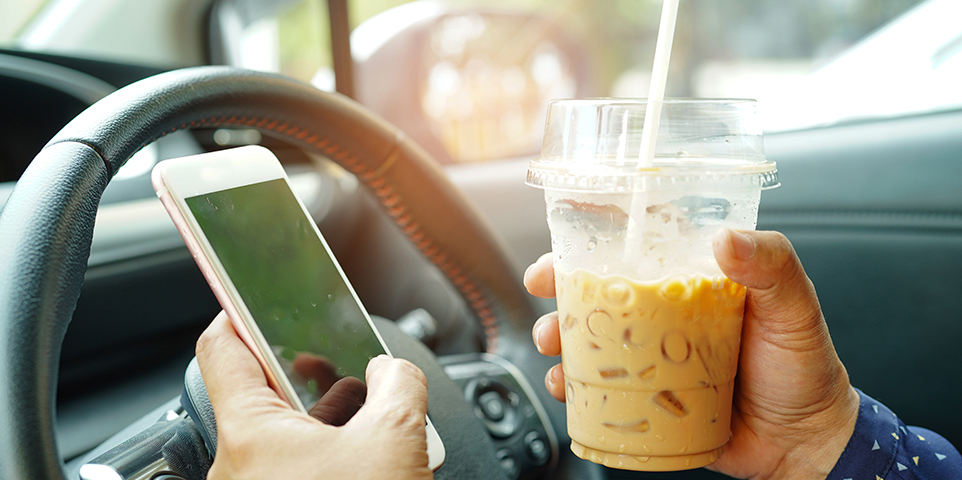
Increased reliance on cellphones has led to a rise in the number of people who use the devices while driving. There are two dangers associated with driving and cellphone use, including text messaging and using the Internet, jeopardizing the safety of vehicle occupants and pedestrians. First, drivers must take their eyes off the road and hands off the wheel to manipulate the devices when dialing, texting and surfing the Web. Second, people can become so absorbed in their conversations and other uses that their ability to concentrate on the act of driving is severely impaired. Since the first law was passed in New York in 2001 banning hand-held cellphone use while driving, there has been debate as to the exact nature and degree of hazard. The latest research shows that using a cellphone when driving is just one of many types of distracted driving that may lead to crashes and near crashes.
RECENT DEVELOPMENTS
- Statistics: In December 2011 the Transportation Department released a report showing that there were an estimated 3,092 fatalities linked to distracted drivers in 2010. The number cannot be compared with the 5,474 distraction-related fatalities reported in 2009, because the the National Highway Traffic Safety Administration (NHTSA) used a new measure called "distraction-affected crashes" to arrive at its estimation. The new measure is designed to focus more narrowly on crashes in which a driver was most likely to have been distracted by dialing a cellphone or texting or by an outside person or event. NHTSA's previous measure, the Fatality Analysis Reporting System (FARS), recorded a broad range of potential distractions, such as careless driving and a cellphone being present.
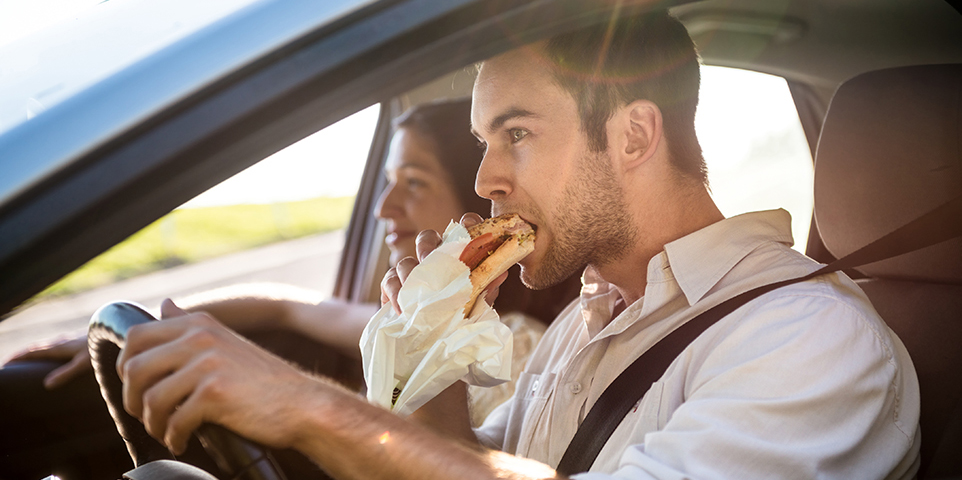
- Research: In March 2012 the AAA Foundation for Traffic Safety released “Distracted Driving Among Newly Licensed Teen Drivers,” an in-car video study that found that teenage girls are twice as likely as teenage boys to use cellphones and other electronic devices while driving. The study also found that teenage female drivers were almost 10 percent more likely to engage in other distracted behaviors such as reaching for an object (nearly 50 percent more likely than males) and eating or drinking (almost 25 percent more likely). By contrast teenage male drivers were about twice as likely to turn around in their seats and were also more likely to communicate with people outside of the vehicle.
- Studies about cellphone use while driving have focused on several different aspects of the problem. Some have looked at its prevalence as the leading cause of driver distraction. Others have looked at the different risks associated with hand-held and hands-free devices. Still others have focused on the seriousness of injuries in crashes involving cellphone users and the demographics of drivers who use cellphones. Of increasing concern is the practice of texting and, with the growth of popularity of so-called smartphones, high-tech cellphones with computer-like features, surfing the Internet while driving.
- The following is a summary of some recent research on the issue.
- A survey released by State Farm in April 2012 found that many teens continue to engage in texting behind the wheel. In the survey, conducted for State Farm by Harris Interactive, only 43 percent of drivers 16 or 17 years of age said that they had never texted while driving, the same percentage as in State Farm’s first survey two years ago. Texting appears to be pervasive, even though 76 percent of teens between the ages of 14 and 17 agree that motorists risk their lives by texting while driving and 93 percent believe that an accident is inevitable among drivers who text.
- In February 2012 researchers at the Massachusetts Institute of Technology (MIT) published a study in Human Factors: The Journal of the Human Factors and Ergonomics Society that found that drivers do not need to be texting or talking on cellphones to become distracted enough to increase the likelihood of an accident. The research shows that when motorists’ minds become closely focused on any topic, they pay less attention to hazards on the road. The group found that drivers’ ability to focus varies according to the cognitive demand of nondriving activities.
- An online survey of almost 900 drivers released by State Farm in December 2011 found that use of mobile web services has increased dramatically over the last two years. Concerning drivers ages 18 to 29 accessing the internet on a cellphone while driving increased from 29 percent in 2009 to 43 percent in 2011; reading social media networks while driving increased from 21 percent to 37 percent over the same period; and updating social networks while driving increased from 20 percent to 33 percent. However, 64 percent said they engaged in texting while driving in 2011, down from 71 percent in 2009. The numbers of drivers of all ages who acknowledged texting while driving stayed relatively flat at 32 percent in 2011 and 31 percent in 2009.
- According to the American Automobile Association Foundation for Traffic Safety’s 2010 Traffic Safety Culture Index, while the vast majority of motorists say that distracted driving behaviors are a very serious threat to their safety, many admitted to talking on a cellphone, texting or emailing while driving. Nearly 25 percent of those surveyed said they had read or sent a text or email while driving in the last month and nearly 70 percent admitted talking on the phone. About 50 percent said cellphone use should be completely banned while driving.
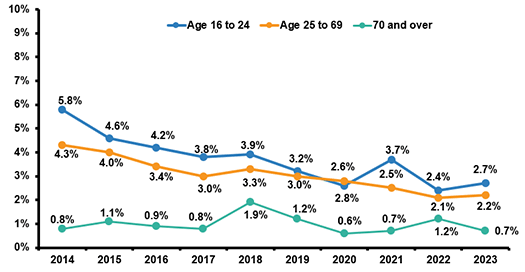
- The percentage of drivers who were text messaging or visibly manipulating hand-held devices increased significantly from 0.6 percent in 2009 to 0.9 percent in 2010, according to the National Highway Safety Administration’s National Occupant Protection Use Survey.
- Driver hand-held cellphone use remained at 5 percent in 2010. These results are from the Public Attitude Monitor 2010: Texting While Driving, a survey released in November 2010 by the Insurance Research Council, found that 18 percent of drivers in the U.S. reported texting while driving in the last 30 days. This figure includes 31 percent of drivers age 16 to 24, 41 percent of drivers age 25 to 39 and only 5 percent of drivers 55 and older.
- A study by the Highway Loss Data Institute (HLDI), released in September 2010, found that texting bans may not reduce crash rates. The study looked at collision claims patterns in four states—California, Louisiana, Minnesota and Washington—before and after text bans went into effect. Collisions went up slightly in all the states, except Washington, where the change was statistically insignificant. Adrian Lund, president of HLDI and the Insurance Institute for Highway Safety, said that the findings “call into question the way policymakers are trying to address the problem of distracted driving crashes. They’re focusing on a single manifestation of distracted driving and banning it. This ignores the endless sources of distraction and relies on banning one source or another to solve the whole problem.”
- State and Federal Initiatives: In December 2011 the National Transportation Safety Board (NTSB) recommended that all states prohibit drivers from using cellphones, the first federal agency to call for a complete ban on telephone conversations from behind the wheel. Although the NTSB has no enforcement authority as the federal government’s leading advocate for safety, its recommendations are influential in Congress and the White House.
- In September 2010 the Governors Highway Safety Association decided not to endorse a proposal calling for a total ban on cellphone use by drivers. In response to a California proposal calling for the group to ask state legislatures to consider a complete ban, the association questioned whether the prohibition could be enforced.
- In March 2010 the Treasury Department proposed that an interim plan prohibiting texting by drivers of interstate buses and trucks over 10,000 pounds announced by Transportation Secretary LaHood in January be made permanent. On October 1, 2009 President Obama signed an executive order prohibiting federal employees from texting while driving. The order applies to employees using cars or cellphones provided by the government or using their own cars or phones for government business. The order applies to some 4.5 million federal employees, including the military.
- The number of state legislatures debating measures that address the problem of cellphone use while driving and other driver distractions continues to rise. As of December 2011 ten states—California, Connecticut, Delaware, Maryland, Nevada, New Jersey, New York, Oregon, Utah and Washington State—plus the District of Columbia had laws on the books banning the use of hand-held cellphones while driving, according the the Insurance Institute of Highway Safety. Almost all of the laws have "primary enforcement" provisions, meaning a motorist may be ticketed for using a hand-held cellphone while driving without any other traffic offense taking place, according to the Insurance Institute for Highway Safety.
- Also as of December 2011, 35 states and the District of Columbia banned the practice of texting with a cellphone while driving. Most of these laws have primary enforcement provisions. The Utah law, passed in May 2009, is the toughest in the nation. Offenders convicted of causing an accident that injures or kills someone while texting behind the wheel face up to 15 years in prison. The law does not consider a crash caused by a multitasking driver as a accident but rather as an inherently reckless act, like drunk driving.
- New Technology: A number of cellphone companies are considering developing technology that will prevent people from receiving calls and texting while driving. The technology is intended to limit dangerous distractions by temporarily interrupting service so that people do not answer their phones when they are behind the wheel. One carrier has already introduced a service that automatically disables rings and alerts and sends calls to voice mail when phones are in a moving car. Some safety advocates said that it is unclear whether consumers would avail themselves of the technologies or whether the technologies would be effective.
- Businesses: Businesses are increasingly prohibiting workers from using cellphones while driving to conduct business. Exxon Mobil and Shell are examples of large companies that ban employees' use of any type of cellphone while driving during work hours. The California Association of Employers recommends that employers develop a cellphone policy that requires employees to pull off the road before conducting business by cellphone.
- Court Decisions: In December 2007 International Paper Co. agreed to pay a $5.2 million settlement to a Georgia woman who was rear-ended by one of its employees. The employee was driving a company car and talking on a company cellphone at the time of the accident. The settlement was reached even though the employee had violated her company’s policy of requiring the use of hands-free headsets while driving. The suit is among the most recent of several cases where an employer has been held liable for an accident caused by a driver using a cellphone. (See background section on Employer and Manufacturer Liability.)
BACKGROUND
Cellphones play an integral role in our society. However, the convenience they offer must be judged against the hazards they pose. Their use contributes to the problem of inattentive driving, which also includes talking, eating, putting on make up and attending to children.
As many as 40 countries may restrict or prohibit the use of cellphones while driving. Countries reported to have laws related to cellphone use include Australia, Austria, Belgium, Brazil, Botswana, Chile, the Czech Republic, Denmark, Egypt, Finland, France, Germany, Greece, Hungary, India, Ireland, Israel, Italy, Japan, Jordan, Kenya, Malaysia, the Netherlands, Norway, the Philippines, Poland, Portugal, Romania, Russia, Singapore, the Slovak Republic, Slovenia, South Africa, South Korea, Spain, Sweden, Switzerland, Taiwan, Turkey, Turkmenistan, the United Kingdom and Zimbabwe. Most countries prohibit the use of hand-held phones while driving.
Supporters of restrictions on driving while using a cellphone say that the distractions associated with cellphone use while driving are far greater than other distractions. Conversations using a cellphone demand greater continuous concentration, which diverts the driver’s eyes from the road and his mind from driving. Opponents of cellphone restrictions say drivers should be educated about the effects of all driver distractions. They also say that existing laws that regulate driving should be more strictly enforced.
Earlier Studies: Over the past decade numerous studies have been conducted on driver inattention, in particular focusing on the use of cellphones. Below is a summary of some these studies.
Motorists who use cellphones while driving are four times as likely to get into crashes serious enough to injure themselves, according to a study of drivers in Perth, Australia, conducted by the Insurance Institute for Highway Safety. The results, published in July 2005, suggest that banning hand-held phone use will not necessarily improve safety if drivers simply switch to hand-free phones. The study found that injury crash risk didn't vary with type of phone.
Many studies have shown that using hand-held cellphones while driving can constitute a hazardous distraction. However, the theory that hands-free sets are safer has been challenged by the findings of several studies. A study from researchers at the University of Utah, published in the summer 2006 issue of Human Factors, the quarterly journal of the Human Factors and Ergonomics Society, concludes that talking on a cellphone while driving is as dangerous as driving drunk, even if the phone is a hands-free model. An earlier study by researchers at the university found that motorists who talked on hands-free cellphones were 18 percent slower in braking and took 17 percent longer to regain the speed they lost when they braked.
A September 2004 study from the National Highway Traffic Safety Administration (NHTSA) found that drivers using hand-free cellphones had to redial calls 40 percent of the time, compared with 18 percent for drivers using hand-held sets, suggesting that hands-free sets may provide drivers with a false sense of ease.
A study released in April 2006 found that almost 80 percent of crashes and 65 percent of near-crashes involved some form of driver inattention within three seconds of the event. The study, The 100-Car Naturalistic Driving Study, conducted by the Virginia Tech Transportation Institute and the NHTSA, broke new ground. (Earlier research found that driver inattention was responsible for 25 to 30 percent of crashes.) The newer study found that the most common distraction is the use of cellphones, followed by drowsiness. However, cellphone use is far less likely to be the cause of a crash or near-miss than other distractions, according to the study. For example, while reaching for a moving object such as a falling cup increased the risk of a crash or near-crash by nine times, talking or listening on a hand-held cellphone only increased the risk by 1.3 times.
Employer and Manufacturer Liability: Although only a handful of high-profile cases have gone to court, employers are still concerned that they might be held liable for accidents caused by their employees while driving and conducting work-related conversations on cellphones. Under the doctrine of vicarious responsibility, employers may be held legally accountable for the negligent acts of employees committed in the course of employment. Employers may also be found negligent if they fail to put in place a policy for the safe use of cellphones. In response, many companies have established cellphone usage policies. Some allow employees to conduct business over the phone as long as they pull over to the side of the road or into a parking lot. Others have completely banned the use of all wireless devices.
In an article published in the June 2003 edition of the North Dakota Law Review, attorney Jordan Michael proposed a theory of cellphone manufacturer liability for auto accidents if they fail to warn users of the dangers of driving and talking on the phone at the same time. The theory holds that maker liability would be similar to the liability of employers who encourage or demand cellphone use on the road. Holding manufacturers liable would cover all persons who drive and use cellphones for personal calls. Michael notes that some car rental agencies have already placed warnings on embedded cellphones in their cars.
INFORMATION SOURCE:
© Insurance Information Institute, Inc. - ALL RIGHTS RESERVED.