MEMBERSHIP
AMPLIFY
EN ESPAÑOL
Connect With Us
- Popular search terms
- Automobile
- Home + Renters
- Claims
- Fraud
- Hurricane
- Popular Topics
- Automobile
- Home + Renters
- The Basics
- Disaster + Preparation
- Life Insurance
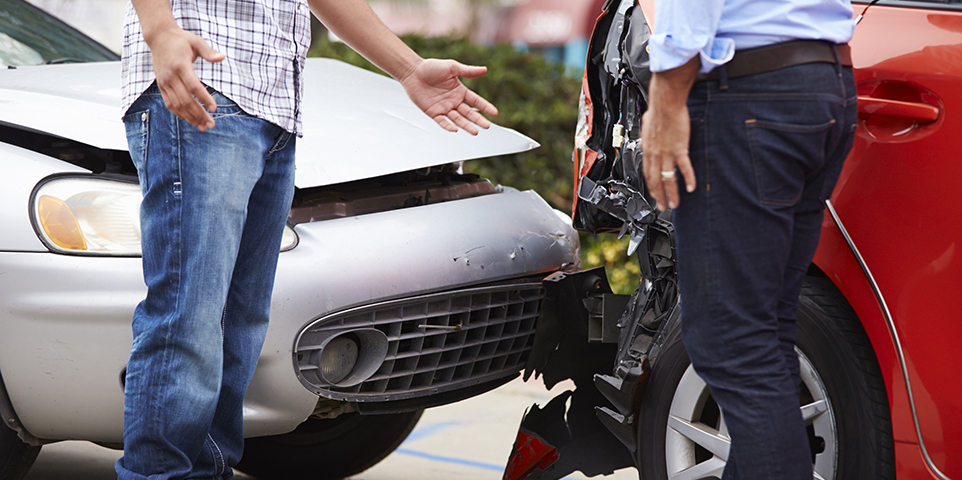
Virtually all states require drivers to have auto liability insurance before they can legally drive a motor vehicle. Liability insurance pays the other driver’s medical, vehicle repair and other costs when the policyholder is at fault in an accident. State laws set the minimum amounts of insurance or other financial security that drivers must pay for the harm caused by their negligence if an accident occurs. The public generally supports compulsory auto insurance and wants these laws enforced.
There are rare exceptions to compulsory auto insurance laws. New Hampshire does not have a compulsory insurance liability law. It requires that drivers demonstrate that they can provide sufficient funds in the event of an “at-fault” accident. Virginia requires motorists to have insurance or register an uninsured vehicle for a significant fee. Motorcycle insurance is compulsory in every state except Hawaii, Michigan, Montana and New Hampshire, which is not a compulsory insurance state. Minimum liability limits are the same for motorcycles as for private passenger vehicles (see Automobile Financial Responsibility Limits By State chart).
Laws in most states have proven ineffective in reducing the number of drivers who are uninsured. There are many reasons for this. Some drivers cannot afford insurance and some drivers with surcharges for accidents or serious traffic violations do not want to pay the high premiums that result from a poor driving record. With the estimated percentage of uninsured drivers in the United States close to 13 percent, it is costly to track down violators of compulsory insurance laws. State insurance departments and insurance companies are using new techniques to combat the uninsured motorist problem, including using electronic means to verify auto insurance quickly.
Penalties for driving without compulsory insurance include fines, which can be as high as $5,000 for a subsequent offense, to license or registration suspension or revocation. Some states can impose jail time, confiscate license plates and impound vehicles.
States may require motorists to have physical proof of valid insurance, which is usually a card issued by the insurer. They may also require motorists to provide evidence of insurance in certain situations. For example, most states require motorists to have valid evidence of insurance in their vehicles at all times and to produce it when stopped by law enforcers. Most states require motorists to produce evidence of insurance when they are involved in a crash or shortly afterward. About half of the states require evidence of insurance when a vehicle is registered.
In recent years laws were enacted that expanded insurers’ roles in verifying compliance with compulsory liability laws and aiding in their enforcement. Insurance companies often work in conjunction with state motor vehicle departments to verify insurance coverage. Most states have laws that specify that insurers must notify the motor vehicle department when a policy is cancelled or not renewed. In some states, insurers are asked to verify the existence of insurance at the time that a specific accident occurred. In other states, insurers are given lists of randomly selected auto registrations, which they are asked to match up with insurance policies that the motorists claim were in effect. Newer laws, known as computer data laws, require an insurer to submit its entire list of automobile liability policies, updated at specified intervals, to a state agency such as the motor vehicle department or to an outside vendor. The state agency or vendor can use the lists to verify registration applicants' declarations that insurance is in effect.
Computer data base systems are designed to promote compliance with the law by increasing the odds of being caught driving uninsured. Some states reported having problems administering this type of system, which in some states had a high error rate, including “mismatch” problems. Mismatch can occur when insurers and the motor vehicle or regulation department have conflicting or erroneous records that mistakenly flag policyholders for not complying with compulsory auto insurance law. Other problems with this type of system is the short-lived veracity of the data, which becomes outdated shortly after insurers report to the state. Subsequent reconciling of state and insurer data discrepancies must be done. State departments of motor vehicles systems have become outdated. According to the Property Casualty Insurers Association of America (PCI), these database systems do not reduce uninsured motorist rates. Transactional databases encounter similar problems, along with specific errors as backlogs are created such as when existing policy cancellations do not keep up with reports of new polices.
Online verification (OLV) systems: In response to the problems with database systems which do not effectively identify and track uninsured motorists, the Insurance Industry Committee on Motor Vehicle Administration (IICMVA) has developed an industry-supported service system that would create a single online verification system. A state’s Department of Motor Vehicles or law enforcement division would use an online portal to insurer data to access real-time information about whether a motorist had insurance. The IICMVA model also established guidelines for uniformity, for example, requiring the transmission of data through Electronic Data Interchange (EDI) using a standardized format. Using this system remedies the need to exchange massive amounts of data because insurers maintain their own data. Advantages of OLVs are that the systems provide instantaneous insurance verification which can be performed as vehicles are being registered or at traffic stops.
Over the years various proposals for dealing with the uninsured motorist problem have been put forward. Unsatisfied judgment funds were set up in a few states to provide a source of funds for accident victims when the at-fault party has no means of paying a judgment, but their effectiveness proved to be limited. A more effective remedy is uninsured (and underinsured) motorist coverage that provides compensation to policyholders when an at-fault motorist has no liability insurance (or insufficient amounts) or when the at-fault motorist is a hit-and-run driver. Like unsatisfied judgment funds, this program does nothing to reduce the number of uninsured motorists but it does provide a way for individual drivers to deal with the financial consequences of accidents with hit-and-run or uninsured drivers. In about 20 jurisdictions, uninsured motorist coverage is mandatory. In other states, insurers are required to offer the coverage but a driver does not have to purchase it. Only a handful of states require drivers to purchase underinsured motorist coverage.
No-fault insurance laws also provide some relief from the problem of uninsured motorists. Under no-fault auto insurance plans, accident victims can collect benefits from their own insurance companies, regardless of whether the other party has insurance coverage (see Background on: No-fault auto insurance for more information).
In response to public concerns that people who obey compulsory laws subsidize scofflaws, legislators in about a dozen states have enacted “no pay, no play” laws, which ban uninsured drivers from suing for noneconomic damages such as pain and suffering. Indiana’s law specifies that in the event of an accident resulting in bodily injury or property damage, with some exceptions, an uninsured driver may not receive noneconomic damages for pain and suffering. Missouri’s law prohibits uninsured drivers from collecting pain and suffering (noneconomic damages) from a motor vehicle accident, unless the defendant in the lawsuit operated a vehicle under the influence of alcohol or drugs or was convicted of involuntary manslaughter or second-degree assault. In Michigan uninsured drivers who are 50 percent or more at fault cannot collect noneconomic damages in the event of an auto accident. California's plan (Proposition 213) goes further by curtailing lawsuits for drunk drivers as well as for those who are uninsured. Louisiana’s law compels uninsured motorists to pay for the first $10,000 in out-of-pocket medical expenses and the first $10,000 in property damage before they can sue the other party. New Jersey's law, like California’s Proposition 213, specifies that uninsured and drunk drivers, as well as motorists who intentionally commit other crimes, may not file lawsuits for economic or noneconomic damages. These laws were upheld in New Jersey and Louisiana. A related issue was addressed in Iowa, where the governor signed a bill prohibiting motorists from collecting noneconomic damages for injuries resulting from an accident if the motorist was using the vehicle while committing a felony.
In December 2012 the Insurance Research Council (IRC) released the findings of a study, The Potential Effects of No Pay, No Play Laws, which examined the 10 states that had no pay, no play laws at the time. It concluded that adopting such a law may result in a reduction of up to 1.6 percent in a state’s percentage of uninsured drivers after controlling for changes in unemployment and insurance affordability, which have significant impacts.
Low-cost auto policies are designed for drivers who cannot afford regularly priced auto policies or who have little or no assets to protect. New Jersey's Basic Policy offers $15,000 in personal injury protection, up to $250,000 in medical benefits for catastrophic injuries and $5,000 property damage liability. Policyholders have the option to buy $10,000 bodily injury liability coverage but they cannot buy uninsured, underinsured or collision and comprehensive coverage. The newer Dollar-A-Day policy provides emergency medical care coverage immediately after an accident and $10,000 death benefits but no coverage for liability.
California's program for low-income drivers is administered by the California Assigned Risk Program. Every auto insurer doing business in the state must take their “fair share” of applicants. The program was originally set up in 1999 for drivers in Los Angeles and San Francisco counties. By the end of 2007, low-cost auto policies had become available to all drivers in the state. In 2012, premiums were lowered statewide resulting from a decrease in crashes and damage in 2011 caused by policyholders.
Only drivers over age 19 with good driving records and low incomes (up to 250 percent of the poverty level) are eligible. Applicants must have motor vehicles valued at $25,000 or less. Rates are set in each county so that premiums are sufficient to cover losses and expenses in each county. The policy provides up to $10,000 in liability coverage for one person involved in an accident and up to $20,000 for more than one person. It also includes payment options, allowing a 15 percent deposit and six monthly installments, optional $10,000/$20,000 uninsured motorist bodily injury coverage and $1,000 medical payments coverage. At the end of 2019, the program had almost 20,400 active policies.
Proponents in favor of granting undocumented immigrants drivers licenses say that the requirement would promote safety and responsibility by ensuring drivers have passed a driving exam and have insurance, as is generally required for licenses, and would ensure that more complete data is available to officials checking drivers license databases for information on an individual driver, such as place of residence or driving record. Opponents say the licenses create a security risk by potentially providing illegal immigrants with ease of access to secure buildings and other privileges.
By February 2021, 16 states and the District of Columbia had enacted laws allowing undocumented immigrants to obtain a drivers license, according to the National Conference of State Legislatures. These licenses cannot be used for federal identification purposes or be used as a REAL ID credential. Most of these states require some form of foreign identification; some require state income tax returns.
By early 2018, the California Department of Motor Vehicles had issued about 1 million driver licenses to undocumented applicants. Providing undocumented drivers with licenses appears to have a limited positive effect on accidents in California. A 2017 study published in Proceedings of the National Academy of Sciences found that after the California law went into effect, the likelihood of hit and run accidents was reduced. The law seems to have no effect on the number of accidents or on the rate of fatal accidents.
In 1927 Massachusetts became the first state to require the purchase of auto liability insurance. Since then 48 states and the District of Columbia have followed suit. Such laws usually have the support of the public despite the fact that compliance with such laws is generally poor and enforcement activities are costly. Compulsory auto insurance laws do nothing to protect drivers involved in accidents with drivers of stolen vehicles or drivers from one of the two states where insurance is not compulsory, drivers of unregistered vehicles, the insurance dodger who cancels a policy immediately after receiving a proof-of-insurance certificate and the hit-and-run driver.
Compulsory auto liability insurance is not necessarily the most effective solution. A 1994 study by the National Association of Independent Insurers (now known as PCI) found that New Hampshire, a state that does not have compulsory insurance laws, had a smaller percentage of uninsured drivers than the nearby states of Rhode Island, Vermont and Connecticut. Only 10 other states had fewer uninsured drivers. New Hampshire also had the lowest percentage of uninsured drivers—9.5 percent—of all the states without compulsory laws.
Affordability influences decisions about whether to purchase auto insurance. Risk Information, Inc. found that the 1995 Insurance Research Council (IRC) uninsured motorist rates by state, when compared with average personal auto insurance expenditures from the NAIC, points to cost, along with enforcement and culture, as factors in decisions not to buy compulsory coverage. For instance, some states such as New Jersey, New York and Louisiana have high insurance costs, especially when measured against median family income, yet their uninsured motorist rates were 12 percent or less at the time of the study. On the other hand, Alabama had an uninsured rate of 28 percent even though coverage cost much less there.
The price of uninsured motorist coverage varies considerably from state to state, depending in part on the percentage of drivers who are uninsured. The price is also influenced by whether the amount available to pay claims can be increased by "stacking," a practice that works to the benefit of people who own more than one insured vehicle. In states where stacking is not specifically prohibited, liability limits under the uninsured motorist coverage may be multiplied by the number of cars insured under a single policy or may be added together where multiple vehicles are insured under different policies. Thus, in a three-car family, where uninsured motorist liability limits are $20,000, in a state that does not prohibit stacking, the amount available to pay a claim in an accident with an uninsured driver would be $60,000. Because stacking drives up the cost of auto insurance, about half of the states prohibit stacking, according to the Property Casualty Insurers Association of America. However, some states, such as Missouri and Pennsylvania have upheld stacking provisions. In the 28 states that allow some form of stacking, some states allow insurance policies to include anti-stacking provisions if clearly stated.
The chart below provides a state-by-state overview of minimum auto liability limits and the insurance required by state law. Coverages that may be rejected by the policyholder, either in writing or verbally (i.e., are not mandatory) have been excluded.
(As of December 2023)
|
(1) The first two numbers refer to bodily injury (BI) liability limits and the third number to property damage (PD) liability. For example, 20/40/10 means coverage up to $40,000 for all persons injured in an accident, subject to a limit of $20,000 for one individual, and $10,000 coverage for property damage.
(2) Low-cost policy limits for low-income drivers in the California Automobile Assigned Risk Plan are 10/20/3.
(3) Instead of policy limits, policyholders can satisfy the requirement with a combined single limit policy. Amounts vary by state.
(4) Lower limits available only with state director approval.
(5) Basic policy (optional) limits are 10/10/5. Uninsured and underinsured motorist coverage not available under the basic policy but uninsured and underinsured motorist coverage is required under the standard policy. Special Automobile Insurance Policy available for certain drivers which only covers emergency treatment and a $10,000 death benefit.
(6) In addition, policyholders must have 50/100 for wrongful death coverage.
(7) Compulsory to buy insurance or pay an uninsured motorists vehicle (UMV) fee to the state department of motor vehicles.
Note: State laws regarding mandatory requirements for uninsured and underinsured motorists vary. State departments of insurance should be consulted to determine whether these coverages are compulsory.
Source: State departments of insurance, Excerpted from Automobile Financial Responsibility Laws and Uninsured/Underinsured Motorist and Umbrella Coverage Requirements, property of American Property Casualty Insurers Association.
In 2022, 14.0 percent of motorists, or about one in seven drivers, were uninsured, according to a 2023 study by the Insurance Research Council (IRC). From 2017 to 2019, most states saw declining UM (Uninsured Motorist) rates. The largest decrease was in Montana, while the largest increases were in Florida and Michigan. With the start of Michigan saw the largest decline with a 6.2 percentage-point drop. The IRC measures the number of uninsured motorists based on insurance claims, using a ratio of insurance claims made by people who were injured by uninsured drivers relative to the claims made by people who were injured by insured drivers. In 2022, 19 states and the District of Columbia had uninsured motorist rates greater than the countrywide rate (14.0 percent) while 31 states had rates below the countrywide rate.
|
(1) Percentage of uninsured drivers, as measured by the ratio of uninsured motorists (UM) claims to bodily injury (BI) claim frequencies.
Source: Insurance Research Council.
|
||||||||||||||||||||||||||||||||||||||||||||||||||||||||||||||||||||||||
(1) Percentage of uninsured drivers, as measured by the ratio of uninsured motorists (UM) claims to bodily injury (BI) claim frequencies.
(2) Rank calculated from unrounded data.
(3) In Florida, compulsory auto laws apply to personal injury protection (PIP) and physical damage, but not to third party bodily injury coverage.
Source: Insurance Research Council.
|
(1) Percentage of uninsured drivers, as measured by the ratio of uninsured motorists (UM) claims to bodily injury (BI) claims frequencies.
(2) Rank calculated from unrounded data.
(3) In Florida, compulsory auto laws apply to personal injury protection (PIP) and physical damage, but not to third party bodily injury coverage.
Source: Insurance Research Council.
Allstate, Auto Insurance State Coverage Requirements
© Insurance Information Institute, Inc. - ALL RIGHTS RESERVED