MEMBERSHIP
AMPLIFY
EN ESPAÑOL
Connect With Us
- Popular search terms
- Automobile
- Home + Renters
- Claims
- Fraud
- Hurricane
- Popular Topics
- Automobile
- Home + Renters
- The Basics
- Disaster + Preparation
- Life Insurance
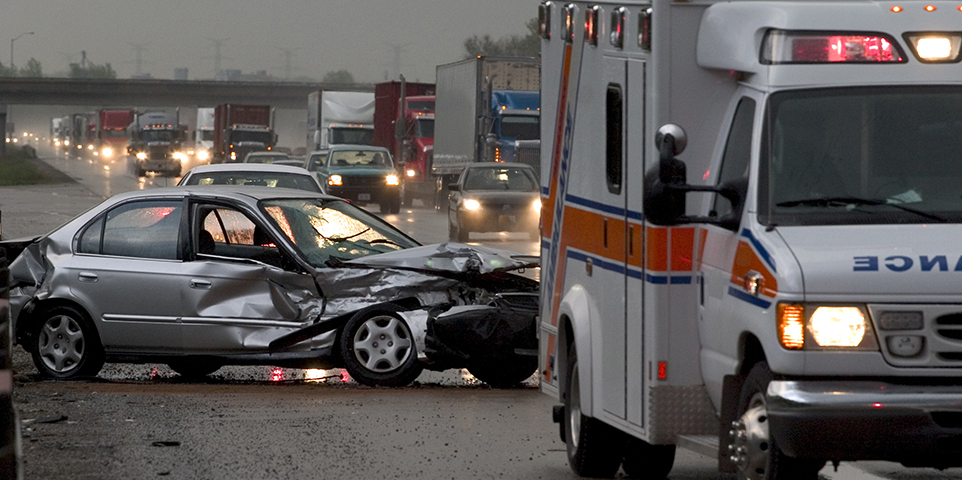
No-fault auto insurance laws require every driver to file a claim with their own insurance company after an accident, regardless of who was at fault. In states with no-fault laws, all drivers are required to purchase personal injury protection (PIP), as part of their auto insurance policies.
In its strictest form, the term no-fault applies only to state laws that both provide for the payment of no-fault first-party benefits and restrict the right to sue, the so-called “limited tort” option.
Under no-fault laws, motorists may sue for severe injuries and for pain and suffering only if the case meets certain conditions. These conditions, known as a threshold, relate to the severity of injury. They may be expressed in verbal terms (a descriptive or verbal threshold) or in dollar amounts of medical bills, a monetary threshold.
Some laws also include minimum requirements for the days of disability incurred as a result of the accident. Because high threshold no-fault systems restrict litigation, they tend to reduce costs and delays in paying claims. Verbal thresholds eliminate the incentive to inflate claims that may exist when there is a dollar "target" for medical expenses. However, in some states the verbal threshold has been eroded over time by broad judicial interpretation of the verbal threshold language, and PIP coverage has become the target of abuse and fraud by dishonest doctors and clinics that bill for unnecessary and expensive medical procedures, pushing up costs.
Twelve states and Puerto Rico have no-fault auto insurance laws. Florida, Michigan, New Jersey, New York and Pennsylvania have verbal thresholds. The other seven states—Hawaii, Kansas, Kentucky, Massachusetts, Minnesota, North Dakota and Utah—use a monetary threshold. Three states have a "choice" no-fault law. In New Jersey, Pennsylvania and Kentucky, motorists may reject the lawsuit threshold and retain the right to sue for any auto-related injury.
State auto liability insurance laws fall into four broad categories: no-fault, choice no-fault, tort liability and add-on. The major differences are whether there are restrictions on the right to sue and whether the policyholder’s own insurer pays first-party benefits, up to the state maximum amount, regardless of who is at fault in the accident. These alternative systems have evolved over time as consumers, regulators and insurers have sought ways to lower the cost and speed up the delivery of compensation for auto accidents.
No-fault: The no-fault system is intended to lower the cost of auto insurance by taking small claims out of the courts. Each insurance company compensates its own policyholders (the first party) for the cost of minor injuries, regardless of who was at fault in the accident. (The second party is the insurance company and the third is the other party or parties hurt as a result of the accident.)
The term “no-fault” can be confusing because it is often used to denote any auto insurance system in which each driver’s own insurance company pays for certain losses, regardless of fault. In its strict form, the term no-fault applies only to states where insurance companies pay first-party benefits and where there are restrictions on the right to sue.
These first-party benefits, known as personal injury protection (PIP), are a mandatory coverage in true no-fault states. The extent of coverage varies by state. In states with the most comprehensive benefits, a policyholder receives compensation for medical fees, lost wages, funeral costs and other out-of-pocket expenses. The major variations involve dollar limits on medical and hospital expenses, funeral and burial expenses, lost income and the amount to be paid a person hired to perform essential services that an injured non-income producer is unable to perform.
Drivers in no-fault states may sue for severe injuries if the case meets certain conditions. These conditions are known as the tort liability threshold and may be expressed in verbal terms such as death or significant disfigurement (verbal threshold) or in dollar amounts of medical bills (monetary threshold).
Choice no-fault: In choice no-fault states, drivers may select one of two options: a no-fault auto insurance policy or a traditional tort liability policy. In New Jersey and Pennsylvania, the no-fault option has a verbal threshold. In Kentucky there is a monetary threshold.
Tort liability: In traditional tort liability states, there are no restrictions on lawsuits. A policyholder at fault in a car crash can be sued by the other driver and by the other driver’s passengers for the pain and suffering the accident caused as well as for out-of-pocket expenses such as medical costs.
Add-on: In add-on states, drivers receive compensation from their own insurance company as they do in no-fault states, but there are no restrictions on lawsuits. The term “add-on” is used because in these states first-party benefits have been added on to the traditional tort liability system. In add-on states, first-party coverage may not be mandatory, and the benefits may be lower than in true no-fault states.
In the 1960s, the traditional auto liability insurance system became the target of public criticism. Dissatisfaction was expressed not only by those purchasing auto insurance but by companies and agencies marketing it and by state officials regulating it. The debate focused on the often expensive and time-consuming process of determining who is at fault—legally liable—when accidents occur.
To reduce the delays and inefficiencies of the system, legislation was introduced in the 1970s in many states, which for the first time allowed accident victims to recover such financial losses as medical and hospital expenses and lost income from their own insurance companies.
Twenty-four states, including the District of Columbia and Puerto Rico, now have laws that allow policyholders to obtain compensation for auto accidents from their own insurers. Of these, 12 states and Puerto Rico have placed restrictions on the right to sue either through a monetary threshold, which allows a suit to be filed for pain and suffering when medical expenses reach a certain stipulated amount or through a descriptive or verbal threshold, which allows suits only when the injury incurred meets the criteria for a serious injury as defined (hence the term verbal or descriptive) by state statute. These are the only true no-fault states.
Pennsylvania, formerly an "add-on" state, began offering consumers the choice between a verbal threshold and no restrictions on lawsuits in 1990. (New Jersey and Kentucky also offer such a choice, except that Kentucky’s threshold is monetary). This is Pennsylvania's second no-fault law. An earlier law was repealed in 1984.
The District of Columbia has neither a true no-fault nor an add-on law. It offers drivers the option of no-fault benefits or fault-based coverage. In the event of an accident, a driver who originally chose to receive no-fault benefits has 60 days to decide whether to receive these benefits or to take the other party to court. This means that, in effect, there are no restrictions on lawsuits.
In the early 1990s, the concept of pure no-fault, which prohibits most lawsuits for bodily injury, began to garner support. Pure no-fault addresses several societal concerns: the waste of resources and the inequities in the liability system and the need to have affordable coverage for medical care and rehabilitation costs. The first attempt at a pure no-fault system was "pay-at-the-pump," a plan to pay for no-fault auto insurance through a fee collected on gasoline sales. The "pay-at-the-pump" initiative campaign failed in all states in which the plan was considered, including California, due to opposition to the gasoline usage-based fee, but the pure no-fault idea was incorporated into a variety of legislative proposals in various states including both Hawaii and California. Proposals introduced in Congress for a “choice” pure no-fault auto insurance system never reached the floor for a vote.
Some auto insurance reformers had proposed the elimination of noneconomic damages from tort liability coverage as a way to reduce costs, with optional coverage provided as a first-party coverage with a pre-determined limit. The premium savings would come not only from the elimination of coverage but also from the reduced temptation to inflate medical costs to boost noneconomic damages which are generally calculated as a percentage of economic damages.
In the late 1980s, Project NEW START, a national nonprofit consumer organization that was devoted to promoting a new auto insurance policy, developed legislation that would offer motorists a choice between a traditional liability-based policy and a strict no-fault policy. Motorists who chose the no-fault program would have had the option to purchase personal injury protection (PIP) above the basic limits and also coverage for pain and suffering. In the first full year after the law took effect, drivers who chose the no-fault policy would have seen their premiums reduced by a significant amount—at least 20 percent of the statewide average premium for insurance required by the state's financial responsibility law, according to the plan. Another version of choice no-fault was known as the O'Connell plan, after University of Virginia Law Professor Jeffrey O'Connell, who, along with Robert E. Keeton, first proposed a no-fault accident compensation system in 1965. This plan allowed a policyholder who chose the tort system and was involved in an accident with a no-fault driver to file a claim under the uninsured motorist provision of the policy. The no-fault driver could not sue and was immune from suits.
Various modifications of these basic proposals have since been introduced in many states, along with measures known as "no-frills" policies that would provide no-fault basic coverage for economic losses to all good drivers in the state for a standard statewide premium. New Jersey's choice no-fault law, passed in 1998, comes closest to this concept with a basic coverage option.
A critical decision in developing a choice no-fault system is how the choice law is framed. In New Jersey, applicants for insurance are presumed to have opted for the verbal threshold on lawsuits unless they specifically reject it; in Pennsylvania, the opposite is true. Pennsylvania policyholders are assumed to want unrestricted access to the courts unless they specifically request the verbal threshold. As a result, more than 85 percent of policyholders in New Jersey have policies restricting lawsuits. By contrast, less than 50 percent have this kind of policy in Pennsylvania, the largest percentage being drivers in Philadelphia where rates are highest. (This is due, in part, to a high propensity among the city's drivers to file bodily injury claims after an auto accident. More than 55 percent of accidents that cause some physical damage there also result in a bodily injury claim, while in other parts of the state the ratio of such claims to physical damage claims is only 17 percent, insurers report.)
The jurisdictions that have forms of true no-fault auto insurance and the dates on which the laws originally became effective are shown below. Compulsory first-party/liability insurance; some restrictions on lawsuits:
Florida, January 1, 1972; temporarily repealed effective October 2007; reenacted effective January 2008
Hawaii, September 1, 1974
Kansas, January 1, 1974
Kentucky, July 1, 1975
Massachusetts, January 1, 1971
Michigan, October 1, 1973
Minnesota, January 1, 1975
New Jersey, January 1, 1973
New York, February 1, 1974
North Dakota, January 1, 1976
Pennsylvania, July 1, 1990 (earlier law passed on July 19, 1974, and repealed in 1984)
Utah, January 1, 1974
Puerto Rico, 1970
States that have repealed their no-fault laws:
Nevada: effective 1974; repealed 1980
Pennsylvania: effective 1976; repealed 1984 (reenacted 1990)
Georgia: effective 1975; repealed 1991
Connecticut: effective January 1, 1973; repealed 1993
Colorado: effective April 1974, repealed July 2003
In states with weak no-fault laws (Georgia's monetary threshold was $500) costs tend to increase more rapidly than in states with a verbal threshold because weak laws provide the broad benefits of a no-fault system without sufficient offsetting savings — almost as many cases go to court as in a traditional tort-based system. In addition, personal injury benefits (PIP) were low. Minimum coverage provided only $2,500 per accident for medical costs (although policies with higher limits could be purchased.) The combination of low mandatory PIP coverage and a low monetary threshold pushed many cases where injuries were minor into the courts, driving up costs.
Then in 1993, Connecticut repealed its no-fault law. The law had been comparatively ineffective because its threshold for lawsuits was only $400.Colorado’s law was repealed or, more exactly, allowed to expire in 2003 after Gov. Bill Owens said that he would not sign another extension unless it significantly reduced the costs of the existing system. But lawmakers could not resolve a dispute about the extent of coverage for medical procedures. Rates in 2002 increased by as much as 20 percent, more than twice the national average, due to the no-fault’s law generous medical care benefits and a low threshold for lawsuits.
As noted earlier, insurers generally favor laws that provide for verbal thresholds on suits instead of dollar thresholds. One of the disadvantages of having a "dollar target" for medical expenses is that it may encourage the submission of fraudulent claims. In addition, unless the law includes a provision that enables the threshold to be adjusted to keep pace with inflation, its effectiveness in curbing litigation is gradually eroded.
There is a wide variation in monetary thresholds and in other benefits provided. One problem in states with higher than average PIP benefits is that dishonest providers of professional services have found ways to abuse and cheat the system, pushing up the cost of auto insurance. New Jersey pioneered reforms designed to curb overuse of medical care in its overhaul of the auto insurance system in 1998 and has subsequently worked to place reasonable limits on medical care costs. Other states have modeled their reforms on the New Jersey protocols.
Fraud and PIP Benefits: In a number of no-fault states, PIP coverage is being exploited by fraud rings that include phony pain clinics and corrupt physicians, chiropractors and lawyers, particularly in states where PIP benefits are generous.
These criminal groups have created medical “mills,” phony clinics that file fraudulent auto insurance medical claims. In an attempt to address this drain on resources, New York modified regulation 68, a reform adopted in 2002 that substantially shortened the time period for reporting auto accident injuries and submitting bills for medical treatment. The reduced notification time allows insurers to look at the treatment plan sooner, thus providing fewer opportunities for unnecessary diagnostic tests and treatments. However, fraud continues to be a major problem in the state. New Jersey dealt with the problem of unnecessary medical treatment by creating precertification medical guidelines, or Care Paths, for the treatment of specific injuries that result from auto accidents, primarily soft tissue injuries.
© Insurance Information Institute, Inc. - ALL RIGHTS RESERVED