
By Lewis Nibbelin, Research Writer, Triple-I
Attorney involvement in auto injury insurance claims is on the rise, driving up the cost of claims, slowing down settlements, and reducing the amounts paid to claimants, according to a new study from the Insurance Research Council (IRC) – an affiliate of The Institutes, like Triple-I.
Drawing from IRC’s new Auto Injury Claims Analytics Database, the report covers more than 7.4 million claims closed between mid-2017 and mid-2022 across nine major insurers, accounting for roughly 43% of the U.S. private passenger auto market.
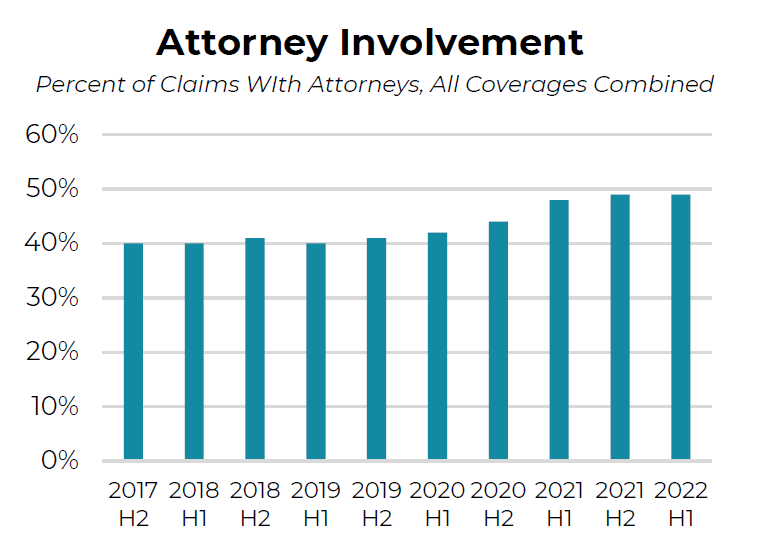
During the study period, litigation and attorney involvement rose across all types of auto coverages and tort environments within all 50 states and the District of Columbia. For all coverages combined, the national litigation rate grew from 10% in 2017 to 18% in 2022, with attorney representation climbing from 40% to nearly 50% of claimants. Among bodily injury claimants, attorney involvement jumped to 57%, the greatest increase.
Bodily injury claim severity also rose sharply, with average payments soaring to more than $20,000 in 2022 from $14,000 in 2017, double the rate of medical inflation. More broadly, growth in average auto injury payments outpaced medical inflation for almost every coverage.
Attorney advertising – estimated by the American Tort Reform Foundation to value $4 billion nationwide in 2025 – often touts big wins for the claimants who hire them, but IRC’s data suggests the opposite effect. After adjusting for out-of-pocket costs and legal fees, bodily injury claimants with attorneys netted less per dollar of medical bills compared to those without attorneys, at $1.40 vs. $1.80.
Alongside worse financial outcomes, bodily injury claimants with attorneys waited longer for resolution, at a median of nearly 440 days for claim closure – more than double the time for those without attorneys. Claimants filing lawsuits waited even longer, with a median of 979 days.
Attorney involvement directly affects insurers’ expenses by driving up legal defense fees and administrative costs that can deplete financial reserves needed to pay claims. Left unchecked, these expenses will continue to put pressure on insurance affordability and availability.
Despite mounting severity in the line, Triple-I’s latest Issues Brief on personal auto insurance points out that legislative reforms in Florida, Georgia, and Louisiana led to substantial market improvements in those states, establishing a nationwide model for addressing the root causes of high premiums rather than the symptoms.
Learn More:
Early Signs of Louisiana Insurance Rate Relief Signal More Work Ahead
Personal Auto Insurance Rebounds After Years of Pandemic Volatility
Clarifying Drivers of Rising Auto Premiums
Florida Reforms Drive Benefits for Consumers
States Take the Lead on Third-Party Litigation Funding Reform