By Kelley Collins, Director of Business Development and Communications, Lightning Protection Institute
Data centers, renewable energy installations, advanced manufacturing facilities, and critical infrastructure increasingly depend on sophisticated electrical and electronic systems. That dependence creates efficiencies and new capabilities, but it can also increase vulnerability when severe weather disrupts power, communications or sensitive equipment.
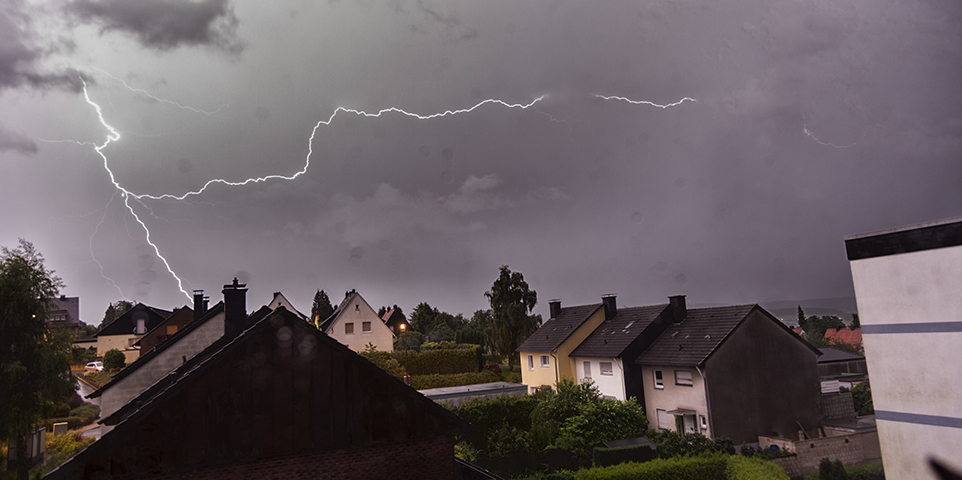
Lightning risk is a case in point. One strike can cause fires, damage electronics and structural components, and interrupt critical operations. The cost of an event may include not only repairing damaged property, but also downtime, interrupted services, supply-chain effects, and premature replacement of equipment.
Lightning-related homeowners insurance claims in the United States exceeded $1 billion in both 2023 and 2024. Those figures cover homes alone and do not capture the potentially greater consequences for large commercial, industrial, and municipal facilities.
A lightning strike affecting an automated manufacturing facility can halt production and disrupt shipments. Damage to a solar installation can affect inverters, electrical components, and the roof itself. A strike affecting a fire station, hospital, or emergency operations center can disrupt communications and other systems precisely when they are needed most.
New technology, new exposures
Solar arrays, wind energy projects, EV charging infrastructure, data centers, robotics and building automation can introduce additional electrical and electronic systems susceptible to disruption. A single point of failure can have cascading consequences across interconnected operations.
This is particularly important for critical infrastructure. Data centers depend on continuous operations. Manufacturing plants increasingly rely on automated production. Hospitals, airports and emergency facilities provide services that cannot simply stop during a severe weather event.
As technology changes the nature of property risk, resilience strategies need to evolve with it.
Mitigation can help reduce the severity of loss
A lightning protection system is more sophisticated than the familiar image of a lightning rod on a roof. A complete system incorporates strike termination devices, conductors, grounding, bonding or potential equalization, and surge protective devices. Together, these components are designed to intercept and safely redirect lightning energy and protect electrical and electronic systems from transient overvoltage.
That distinction matters from a risk-management perspective because lightning can cause damage through both direct and indirect strikes. A building does not necessarily need to take a direct hit for nearby lightning to produce damaging surges through utility lines, piping or the ground.
Effective protection also is not a one-time exercise. Systems should be properly designed, installed, inspected and maintained. Changes to roofs and structures can affect existing protection, making continued inspection particularly important.
Resilience and insurability go hand in hand
The insurance industry has a fundamental interest in strategies that can prevent avoidable losses.
Documented, properly maintained protection can help reduce the potential for severe property damage and operational disruption. The source article notes that facilities with well-maintained lightning protection are better positioned to avoid major claims following severe storms.
That reflects a broader shift in how society thinks about insurance and resilience. Risk transfer remains essential, but insurance is only one part of a larger resilience toolkit. Building standards, engineering, technology, risk modeling, maintenance and mitigation all have roles to play in reducing losses before they occur.
For businesses, that means thinking beyond the question, “What happens if we have a loss?” An equally important question is, “What can we reasonably do now to prevent or reduce one?”
Standards, inspections, maintenance matter
Risk reduction depends on more than installing equipment. Lightning protection should be approached as a system and incorporated into broader building design and facility-management practices.
Qualified lightning protection contractors and independent third-party inspection to verify that systems have been properly installed are essential.
Preventive and predictive maintenance can identify vulnerabilities before they become failures. Lightning detection technology can add another layer of risk management by helping facilities track strikes that may affect industrial sites or electrical infrastructure.
From “repair and replace” to “predict and prevent”
Lightning protection offers a useful example of the insurance industry’s broader opportunity to move from a predominantly “repair and replace” mindset toward “predict and prevent.” Properly designed and maintained systems can protect people and property, support business continuity, and extend the useful life of expensive infrastructure.
Resilience ultimately depends on shared action among property owners, designers, engineers, contractors, risk managers, insurers and public officials. The objective is not to eliminate risk — an impossible task — but to understand it, reduce it where practical, and be financially prepared for what happens next.
About the author: Kelley Collins has more than 25 years of technical and strategic experience in science and technology industries. She serves as director of business development and communications for the Lightning Protection Institute and is co-owner and president of Lightning Protection University. Her work focuses on technical education, industry partnerships and resilient infrastructure.